Skip to content
paysagement

How much does a residential irrigation system cost in Quebec?

For a typical project of 334.5 m² (3,600 sq ft) of watered lawn (all of Quebec): $3,001 doing it yourself, $2,400 to $3,400 by a contractor, before tax.

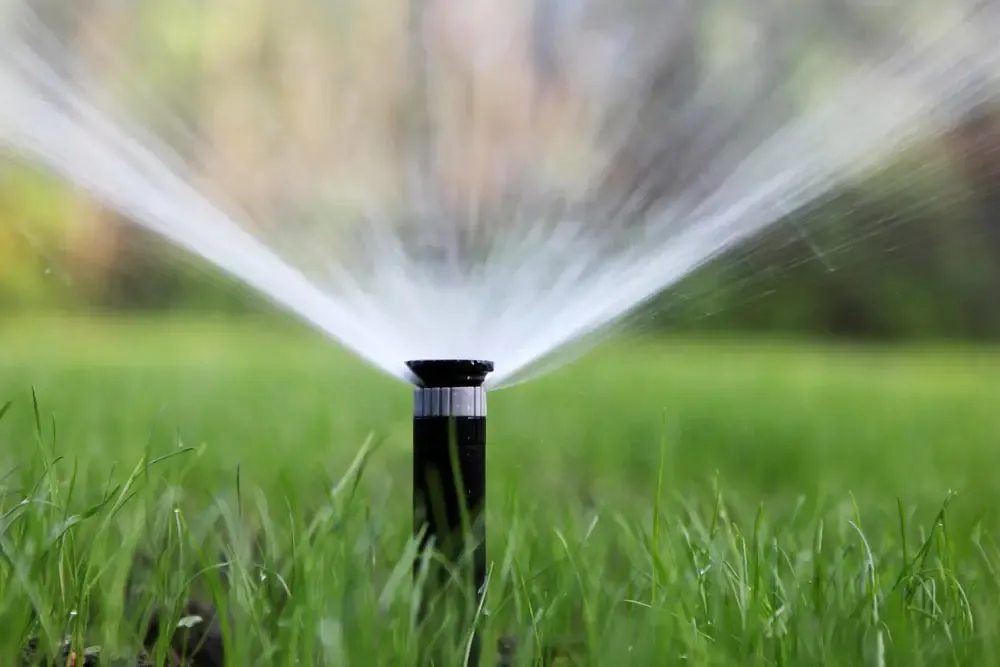
Pop-up irrigation spray head throwing a fan of water over a green lawn
Photo: Sid's Pond & Gardenscape

Prices follow the chosen region when it has observed prices; otherwise the province-wide value applies and the confidence grade drops.

Do it yourself or hire a contractor

Both columns come from the same engine, with the same quantities. The difference: labour, site-scale equipment, overhead and margin.

Do it yourself

Materials at retail prices, rentals, delivery and disposal, plus your time as a beginner (*).

$3,001

* Includes your time: 42.8 h × $35.05/h (beginner). Money spent only: $1,503

Before tax
Money spent only$1,503
GST (5%)$75
QST (9.975%)$150
Total with taxes$1,728

By a contractor

Labour, equipment, materials, overhead and margin.

estimate
$2,400 to $3,400
Displayed range, before tax
Typical scenario$2,859
GST (5%)$143
QST (9.975%)$285
Total with taxes$3,287

Crew pace: 8 person-hours

Stacked extremes (everything low, everything high): $1,923 to $4,373

The range shows the effect of documented price and productivity spreads. It is not a probability.

Hiring costs less if your time is worth more than:

estimate
$32/h
Based on beginner hours.

At $35/h: hiring costs less.

Break-even = (the contractor's typical price minus the money spent doing it yourself) divided by your person-hours. Before tax on both sides: GST and QST apply to both.

Your time

Your time
2
$35.05/h
By default, the average hourly wage in Quebec:
Money, hours, days, value of the time and true cost, beginner and intermediate
MeasureBeginnerIntermediate
Money spent$1,503$1,503
Person-hours43 h29 h
Days of 8 h, 2 people3 days2 days
Your time at $35/h$1,498$1,018
True cost$3,001$2,520

Working days only: add rain days and waiting times (curing, deliveries).

True cost: money and time

Before tax, one scale for every bar.

Money spentYour time ($35/h)Contractor's rangeTypical price ($2,900)
Do-it-yourself true cost and a contractor's price, before tax
Money, do it yourself$1,503
True cost, beginner$3,001
True cost, intermediate$2,520
Contractor$2,400 to $3,400 ($2,900)
Adjust the dimensions in the estimator

Where the money goes

A contractor's typical price, split by category. The same split applies to the do-it-yourself total, without overhead or margin.
Split of the typical price before tax
Materials31%$874
Labour13%$369
Equipment and rentals5%$131
Overhead27%$772
Margin10%$286
Other15%$426
What moves the total
  • Contractor overhead: $2,573 to $3,274
  • Contractor profit: $2,573 to $3,105
  • Price: Potable water connection and backflow preventer (CMMTQ plumber), allowance: $2,663 to $3,054

The range shows the effect of documented price and productivity spreads. It is not a probability.

Difficulty, time and tools

Level

Intermediate

Estimated working time
Beginner43 person-hours
Intermediate29 person-hours

Hours for the typical project: the work calculation (a crew's pace times the level's factor, with rework, learning and unloading) plus the guide's planning and checks.

To rent
  • Walk-behind trencher
To buy
  • Hose-thread pressure gauge
  • Flags and string
  • PVC pipe cutter
  • Safety glasses and gloves
  • Wire stripper
  • Head adjustment key
  • Valve box key
When to call a pro
  • The connection to drinking water, the shut-off and the backflow preventer are plumbing: done for others, they require a CMMTQ plumber. For your own house, we strongly recommend a plumber.Applies to the typical project
  • Injecting fertilizer into the irrigation water raises the risk to drinking water: the plumber must choose a backflow preventer with a higher level of protection.
  • The controller needs a new outlet: that is work for a CMEQ electrician. A homeowner may not do their own electrical work.
  • Trenches often cross cables: file a free Info-Excavation request and dig by hand near the marks.Applies to the typical project
  • Check the municipal drinking water bylaw: permitted hours for automatic watering, rain sensor, backflow preventer requirements.Applies to the typical project

The five phases

Every project follows the same sequence. The guide details each step, with its times and quantities.
  1. 01

    Measure the water supply and design the zones

    Everything starts with two measurements: static pressure (gauge on an outdoor tap, nothing running) and available flow (bucket test). The calculator uses only part of the flow for each zone, to keep good pressure at the heads.

  2. 02

    Locates, plumber, electrician and bylaws

    Info-Excavation. Irrigation trenches are shallow, but they often cross cables: file the free request and dig by hand near the marks.

  3. 03

    Dig the trenches and lay the pipe

    Irrigation trenches are usually 15 to 30 cm deep. Under a lawn, lift the sod strips first so they can go back afterward; a rented trencher is much faster than a spade over long runs.

  4. 04

    Build the valve manifold and wire the controller

    The valve manifold goes downstream of the backflow preventer, in an accessible buried box. Leave enough space between valves to replace one someday.

  5. 05

    Fit the heads, adjust, program and shut down for winter

    Heads go in after flushing, at finished grade. At the bottom of a slope, a head fitted with a check valve stops the pipe water from draining out there after the zone shuts off.

Rules in Quebec

What the law and municipalities require for this kind of work. Each line cites its source.
  • LicenceAll of Quebec

    Connecting an irrigation system to drinking water and the backflow preventer are plumbing work: done for others, they are reserved to CMMTQ members (subcategory 15.5). Piping installed downstream of the device is excluded from the Plumbing chapter of the Construction Code.

    LégisQuébec, Éditeur officiel du QuébecRégie du bâtiment du QuébecChecked October 10, 2026

  • LicenceAll of Quebec

    A new outlet or circuit for the controller is electrical work: it must be done by a CMEQ contractor, even at your own home.

    Gouvernement du Québec (LégisQuébec)Régie du bâtiment du QuébecChecked October 10, 2026

  • PermitAll of Quebec

    Cities regulate watering with drinking water (days, hours, automatic systems, temporary bans) and sometimes connections. Read your municipality's bylaw before installing.

    Soumission RénovationChecked October 10, 2026

  • LocateAll of Quebec

    Before digging trenches, file a free Info-Excavation request. The RBQ asks contractors to file at least 4 business days before work.

    Régie du bâtiment du QuébecHydro-QuébecChecked October 10, 2026

  • Consumer protectionAll of Quebec

    Ask for a written contract that details the zones, heads, the plumber's connection, the total price, the warranty and, if included, the fall shutdown and spring start-up. A contract signed at your home after a sales visit can be cancelled within 10 days.

    Office de la protection du consommateurChecked October 10, 2026

Before you hire

Six questions to ask every contractor. A good quote answers them in writing, with numbers.
  1. 01

    Who makes the regulated connection?

    A CMEQ member electrician for anything on the 120 V side; a plumber for the potable water connection and backflow prevention.

  2. 02

    Where is the zone or circuit plan?

    A sketch with lengths, the number of heads or fixtures and the controller or transformer capacity.

  3. 03

    Exactly which equipment?

    The brand and model of each main part, so quotes can be compared with each other.

  4. 04

    How deep, and how under hard surfaces?

    Burial depth and sleeves under walkways and driveways.

  5. 05

    Start-up and seasonal service?

    Programming, adjustments, fall blowout and spring start-up: included or at what price.

  6. 06

    What warranty, in writing?

    On parts and on labour, with their duration.

In every case: an RBQ licence when the work requires one, a business number (NEQ), civil liability insurance and a written contract.

Guide: choosing a contractor

Sources and review

Draft: this content has not yet been reviewed by an installer or an engineer. The numbers come from the engine; the explanations may still change.

  • Last reviewed: October 10, 2026
  • Next review due: October 10, 2027
  • 15 sources cited
All the guide's sources

Words used on this page