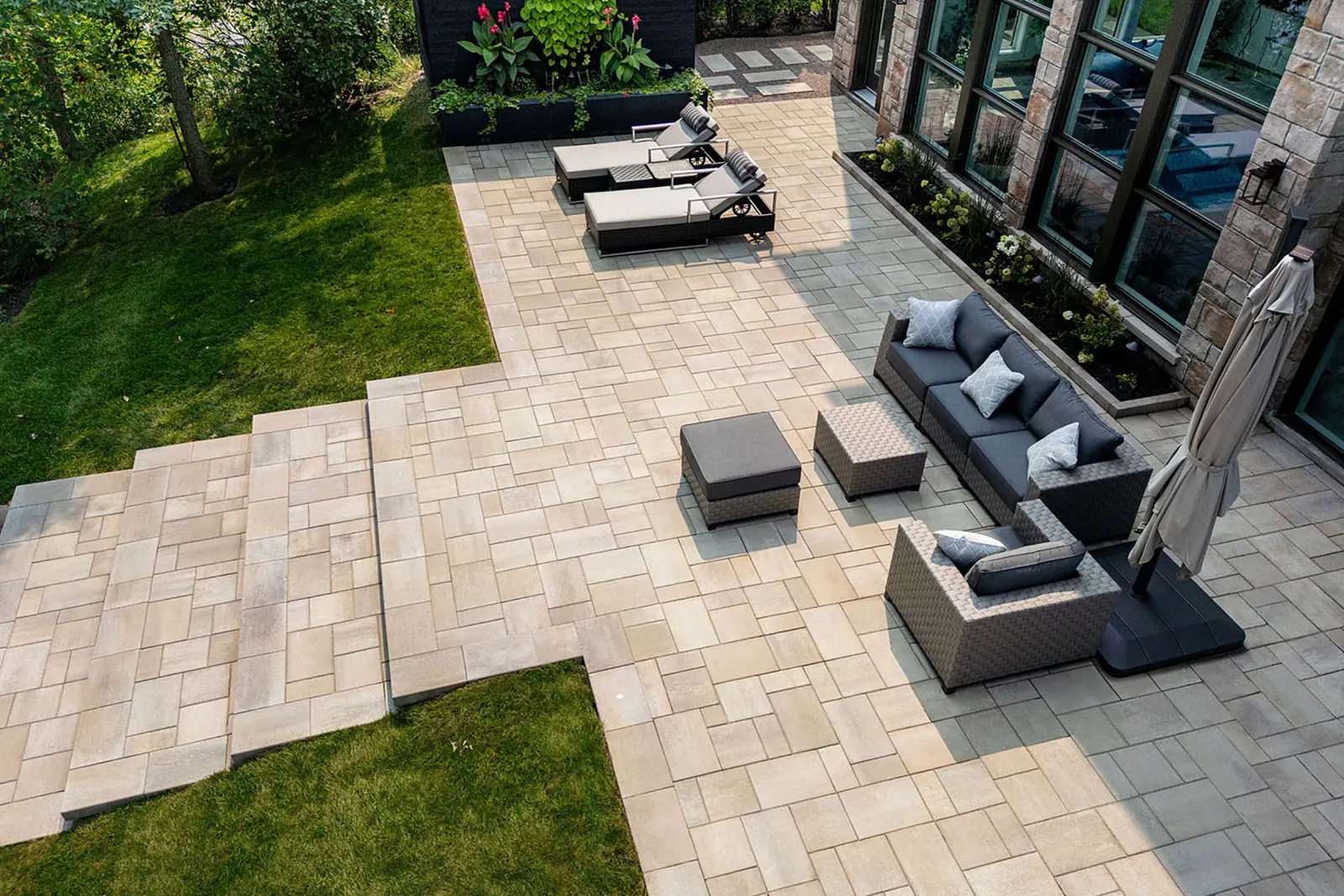
Patio
Pavers or slabs on a compacted stone base, behind the house.
27.9 m² (300 sq ft), sand and gravel soil
- Contractor
- $11,000 to $18,000
- Do it yourself
- $13,000
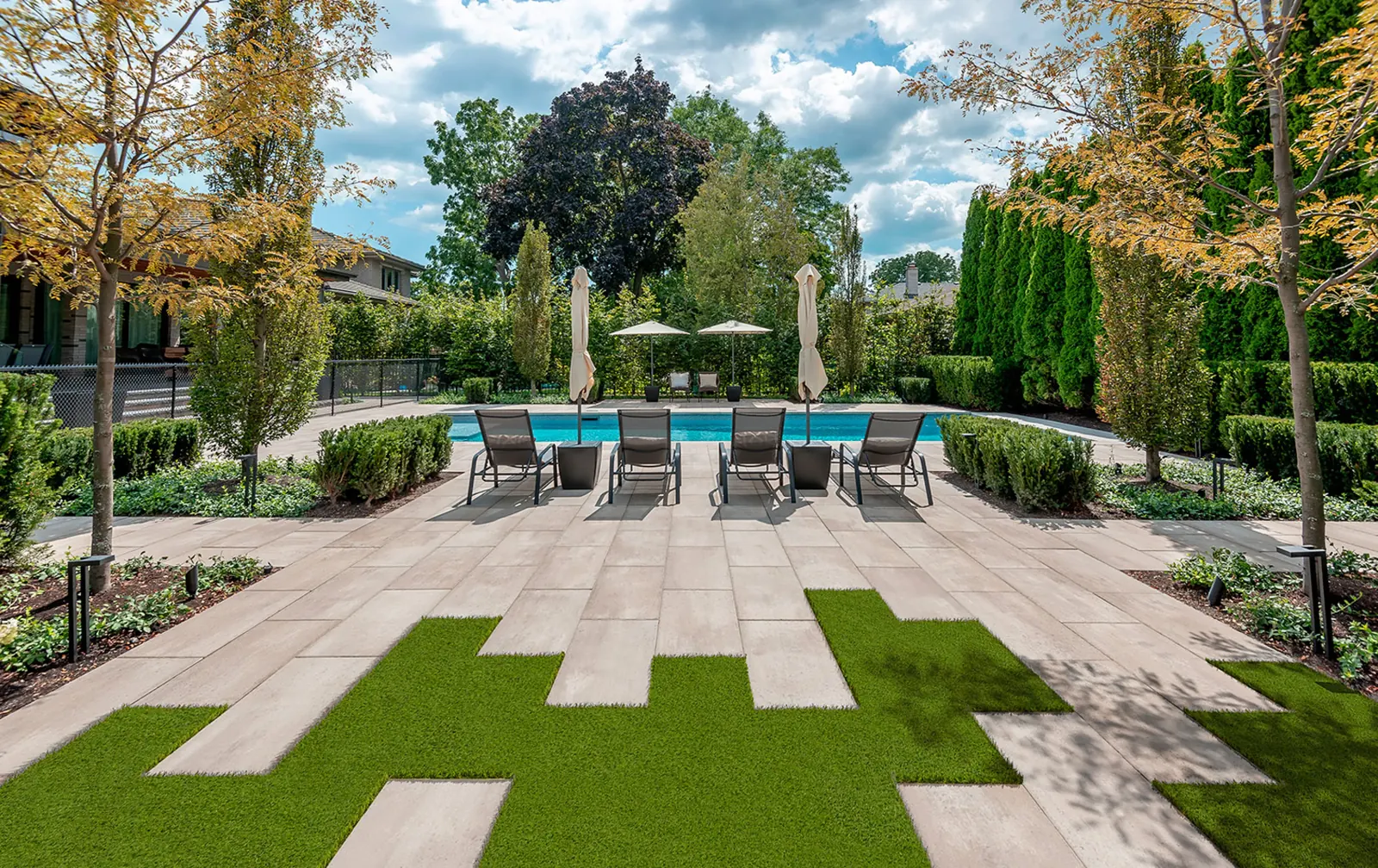
For eleven landscaping projects, the cost if you do it yourself and a contractor's price, computed by the same engine. Every price shows its source, date and region.
Each card shows a contractor's range and the do-it-yourself cost for the guide's typical project, computed for the province. Open a card for the split, the steps and the rules.
By default, the average hourly wage in Quebec ($35.05, Statistics Canada, 2025). Kept in this browser and used by the estimators and project pages.
For the typical patio27.9 m² (300 sq ft), sand and gravel soil
Break-even for a beginner: $45.81/h At this rate, doing it yourself costs less than a contractor's typical price ($14,251).
Estimates before tax, computed with prices as of October 13, 2026.
Pavers or slabs on a compacted stone base, behind the house.
27.9 m² (300 sq ft), sand and gravel soil
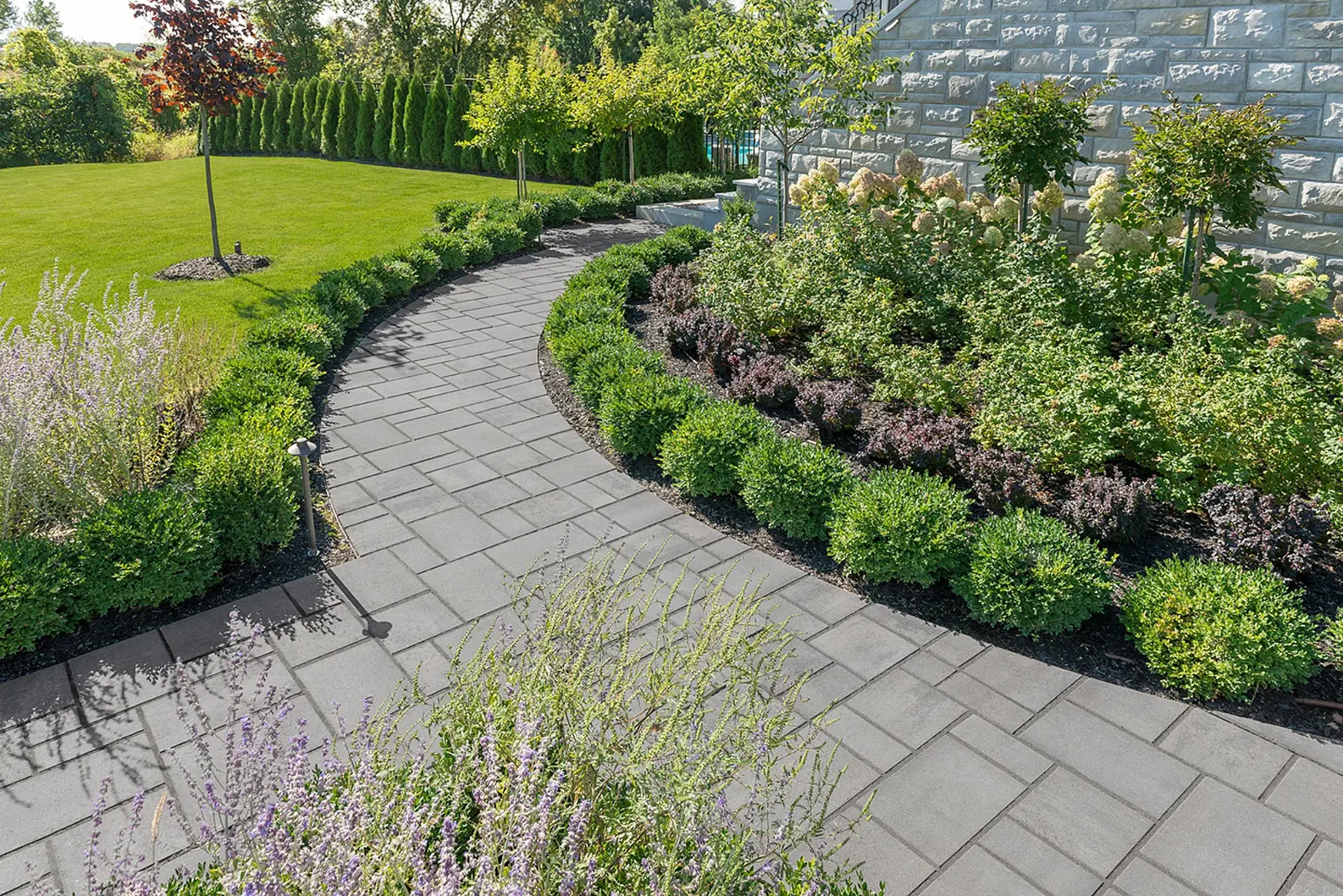
A footpath between the street, the entrance and the yard.
12 m² (129 sq ft), clay soil
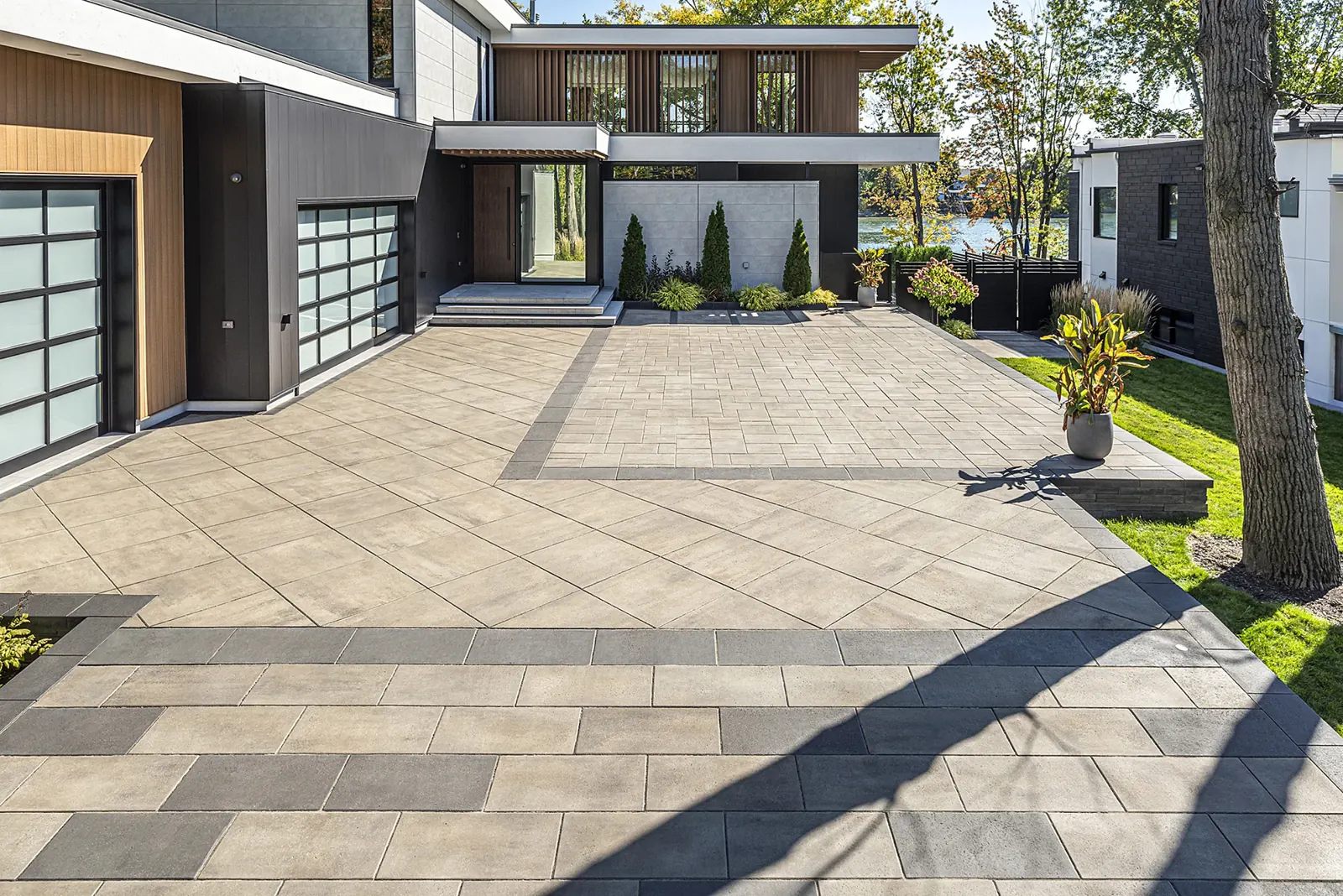
A driveway for cars: thicker base, thicker pavers and a curb cut.
55.7 m² (600 sq ft), clay soil
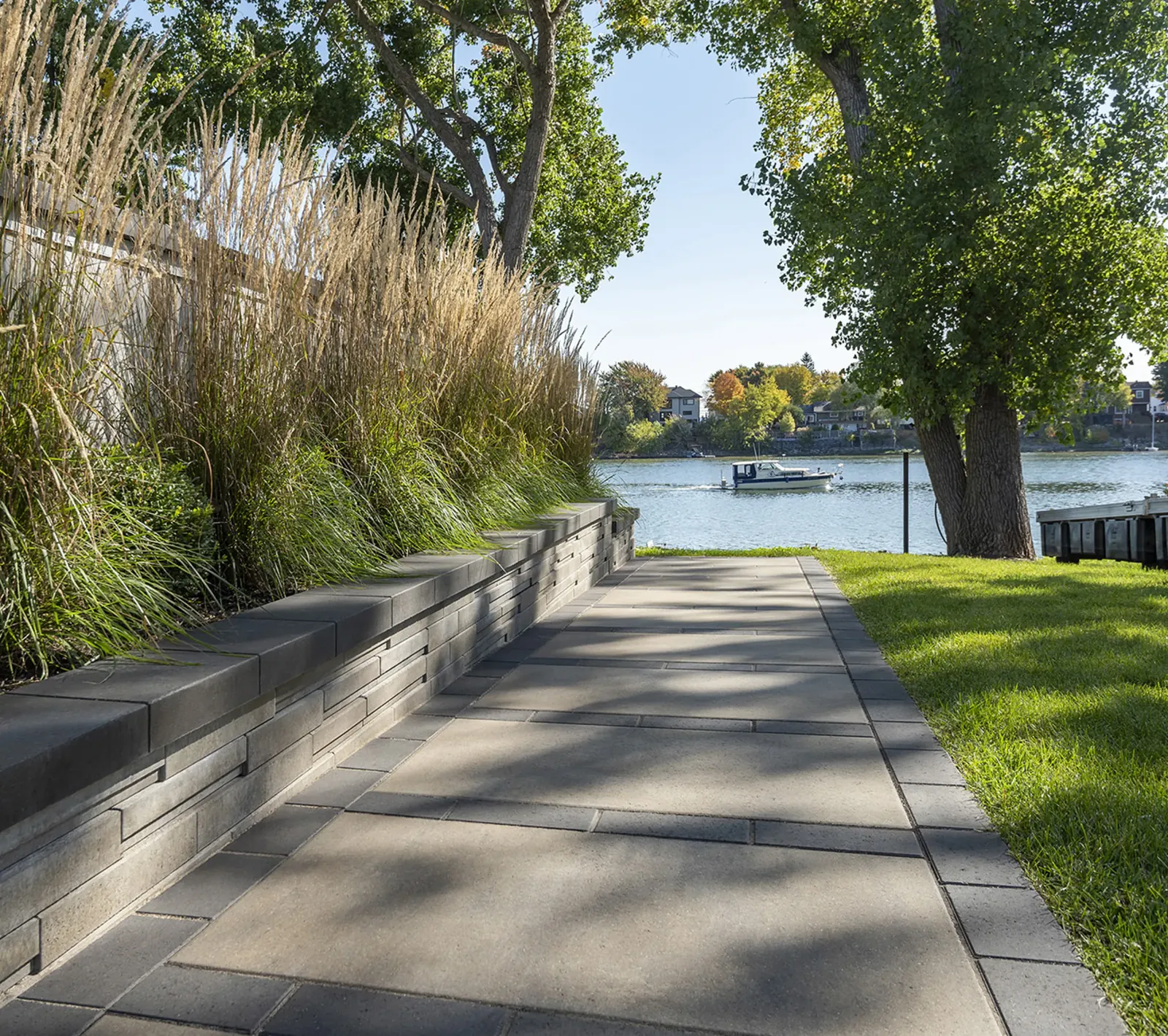
A block wall that holds back soil, with its base, drainage and caps.
10 m (33 ft) long, 600 mm (23.6 in) exposed height
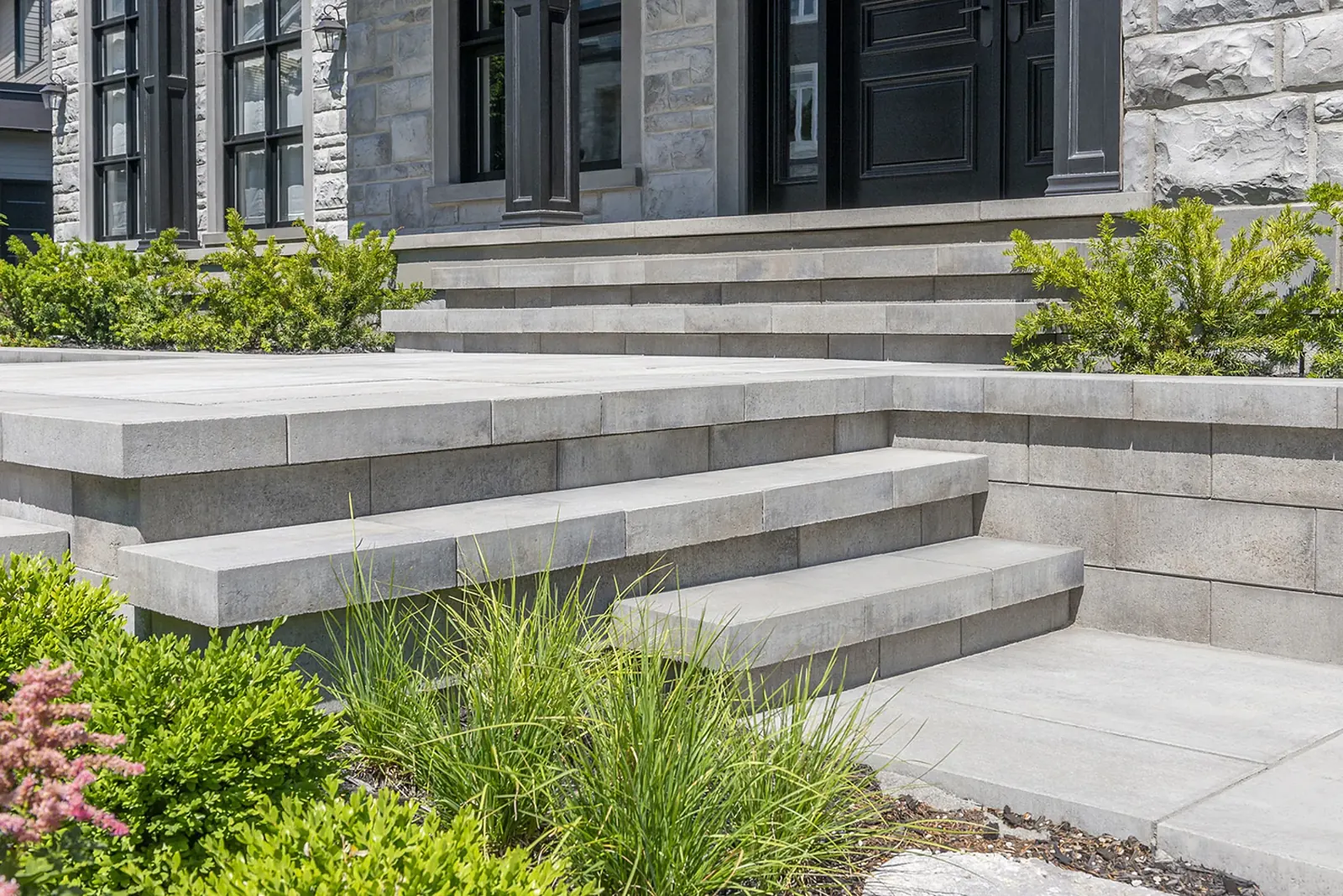
Block and slab steps, all the same height, on a compacted base.
600 mm (23.6 in) total rise, 1.5 m (5 ft) wide
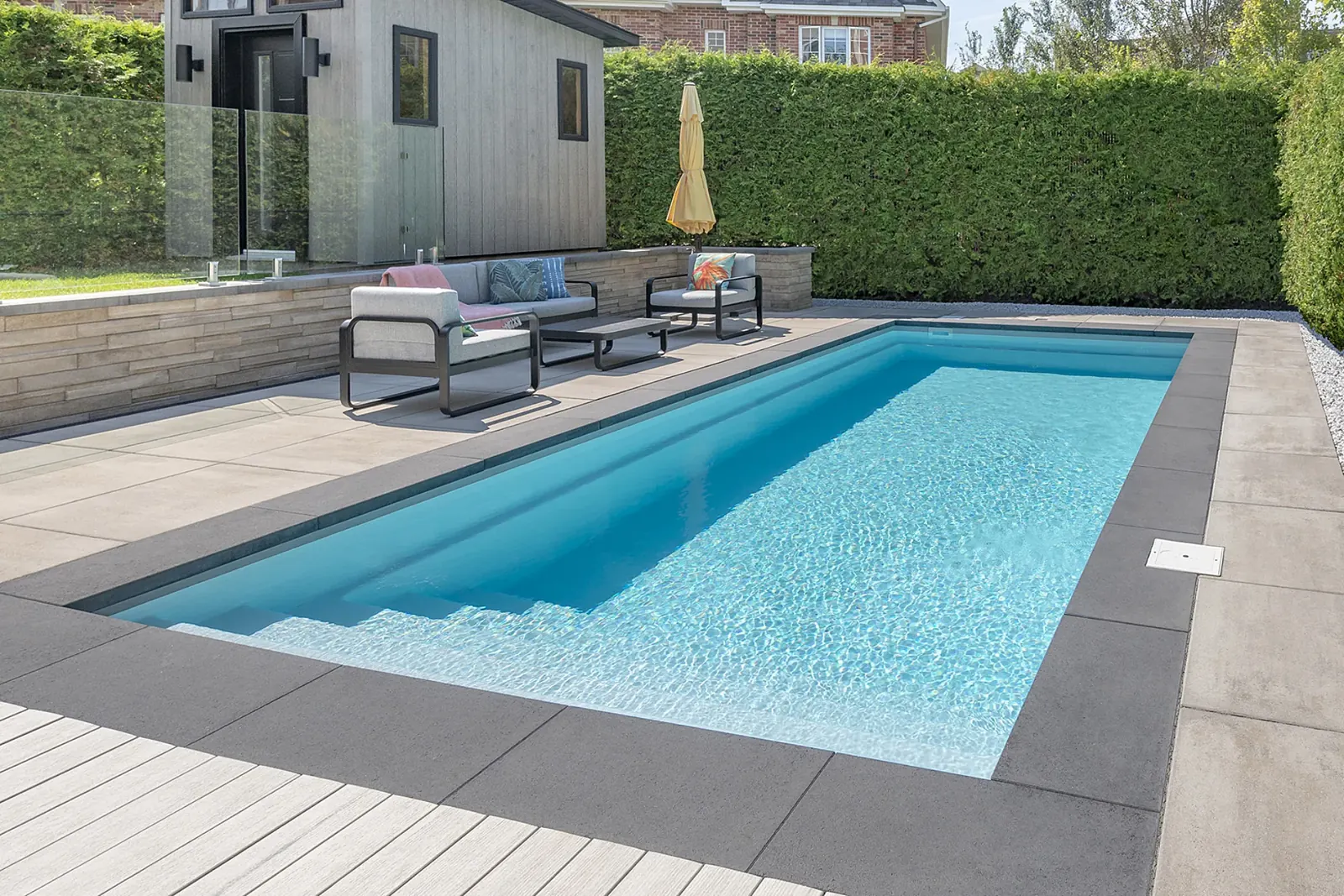
A paved surface around an in-ground pool, without touching the enclosure.
41 m² (442 sq ft), unknown fill soil

French drain, catch basin and downspouts to move water away from the house.
20 m (66 ft) of French drain and 2 downspouts
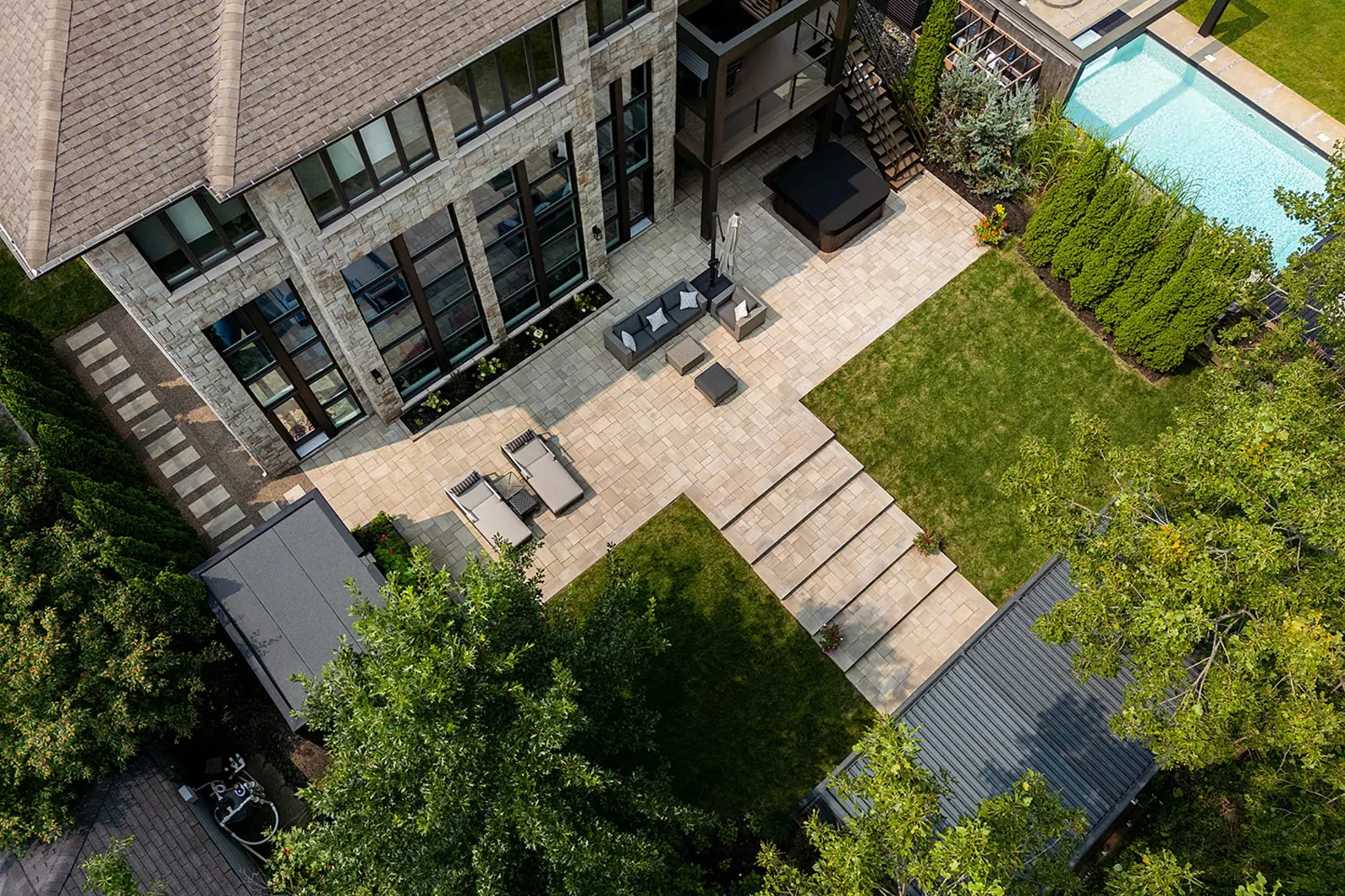
Reshaping the ground so water runs away from the foundation, without sending it to the neighbour.
100 m² (1,076 sq ft) of reshaped ground
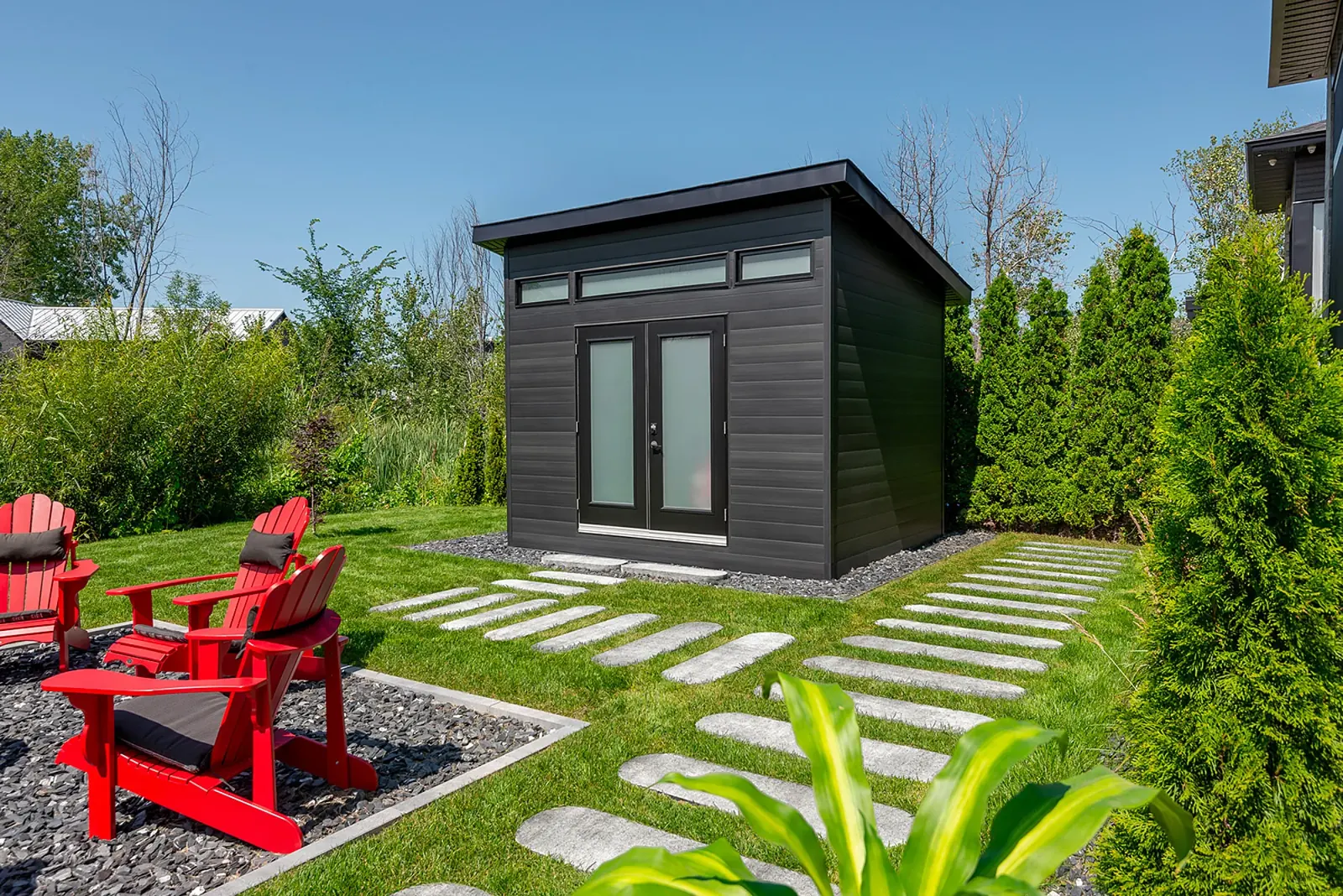
Topsoil, fine grading and laying sod.
100 m² (1,076 sq ft) of sod on 150 mm (5.9 in) of topsoil
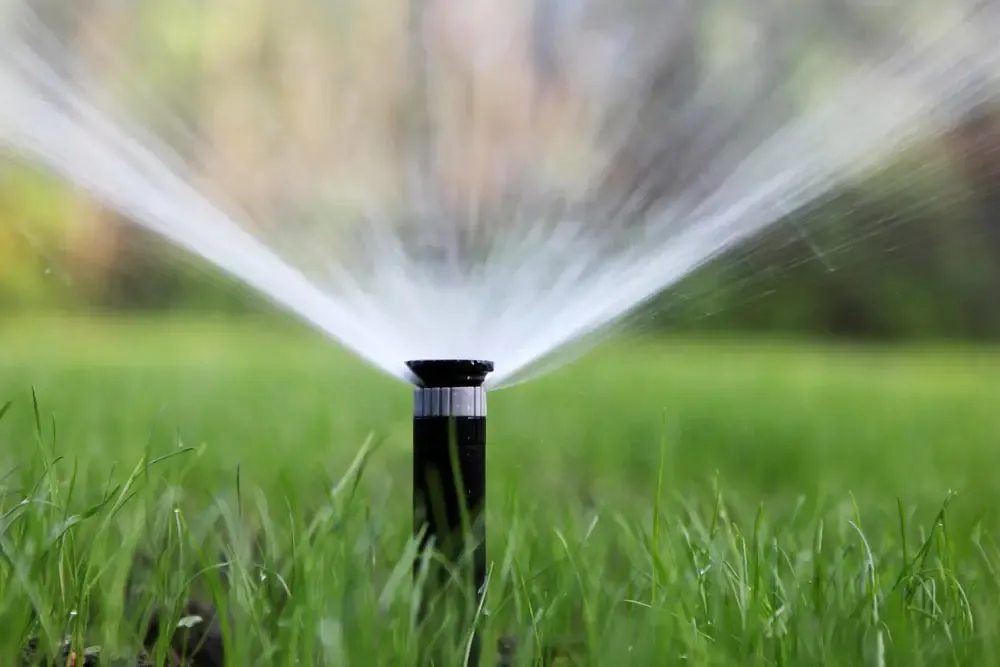
Heads, zones, valves and a controller to water the lawn without waste.
334.5 m² (3,600 sq ft) of watered lawn
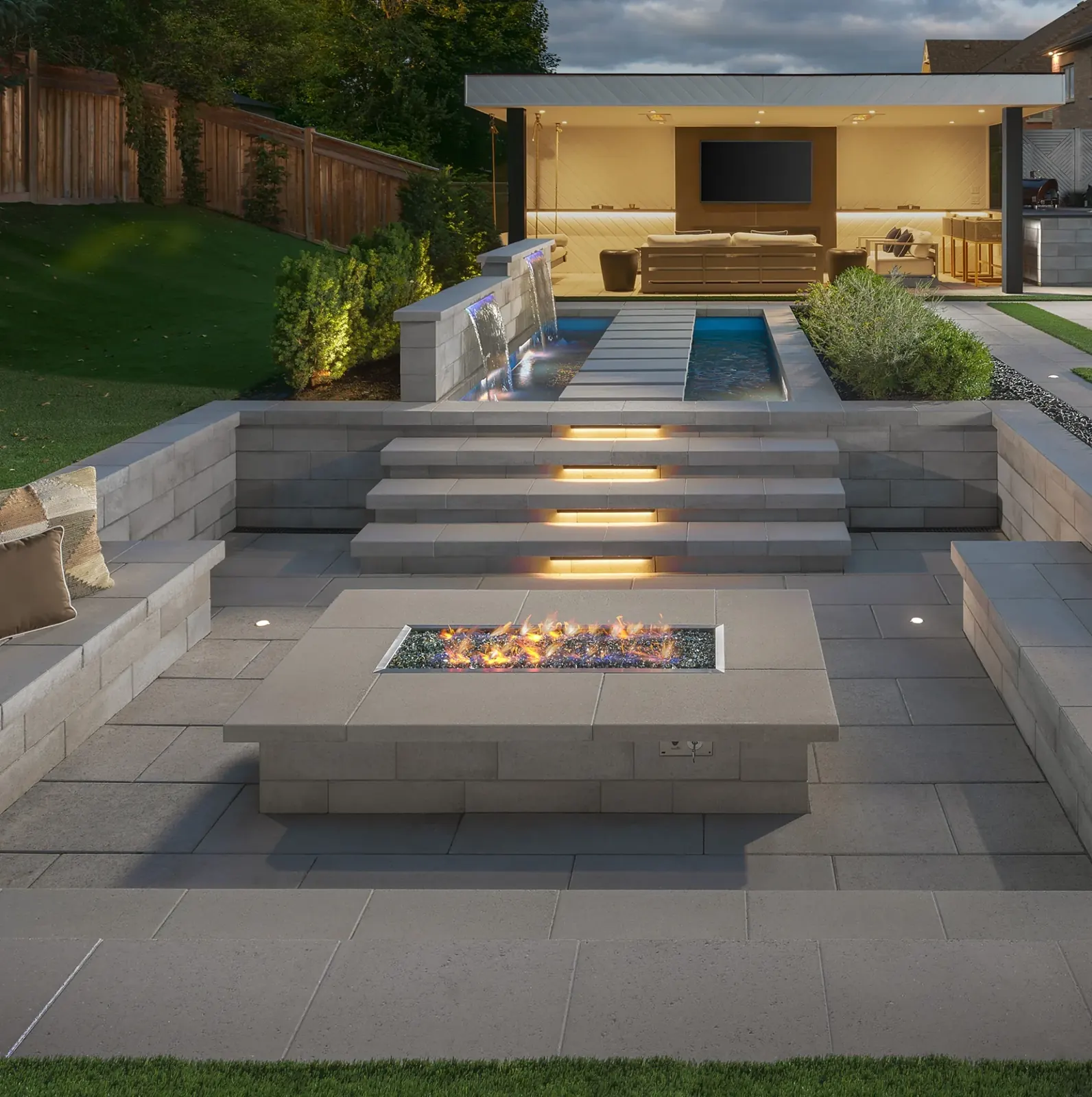
12 V fixtures, buried cable and a transformer plugged into an outdoor outlet.
10 fixtures on 30.5 m (100 ft) of cable
The range shows the effect of documented price and productivity spreads. It is not a probability.
How the numbers are made* Do it yourself: the money spent plus a beginner's hours at $35.05/h.
A paver patio is a stack of layers. Each one has a job, and every shortcut shows up eventually, often by the first thaw. The thicknesses below are computed by the engine for the typical patio on sand and gravel soil; on clay, the base is thicker.
285 mm (11.2 in) in total
In the order of the work, from the ground up to the joints.
The soil is dug to the computed depth, sloped and compacted. The base does not go below the frost line: it drains.
If corners are cut. Digging too shallow to save on the bin: the base is thin and the patio follows the soil's movements.
WhyOn clay or silt, a fabric separates the stone from the fine soil so the two do not mix.
If corners are cut. Without geotextile on fine soil, the base sinks into the soil within a few years and loses its bearing capacity.
WhyThe heart of the job. It carries the loads, drains water and limits frost effects. It is spread and compacted in thin lifts.
If corners are cut. A base too thin or compacted in one go: settling and frost heave.
WhyA thin layer, screeded level, that gives the flat surface. It does not fix an uneven base.
If corners are cut. Stone dust or too thick a bed: water stays trapped, the bed shifts and dips appear.
WhyThe only layer you see, and the quickest to lay when everything below it is right.
If corners are cut. Misaligned pavers and uneven joints. The cause is usually in the layers below.
WhyFills the joints, locks the pavers together, slows weeds and erosion.
If corners are cut. Plain sand: joints wash out, pavers move, weeds move in.
WhyLabour is only part of the price. Equipment, delivery, soil disposal, overhead and margin count as much.
27.9 m² (300 sq ft), sand and gravel soil
$11,000 to $18,000
By a contractor, before tax. Typical scenario $14,251
678
observed prices
in the cost database, each with its source
554
sources cited
guides, prices, rules and rates
October 10, 2026
most recent observed price in the database
paysagement cost database
No advertising
no tracking cookies, no audience analytics
No account
your projects stay on your device
Step by step, with times for a beginner and for someone experienced, the typical project's quantities and the rules that apply.
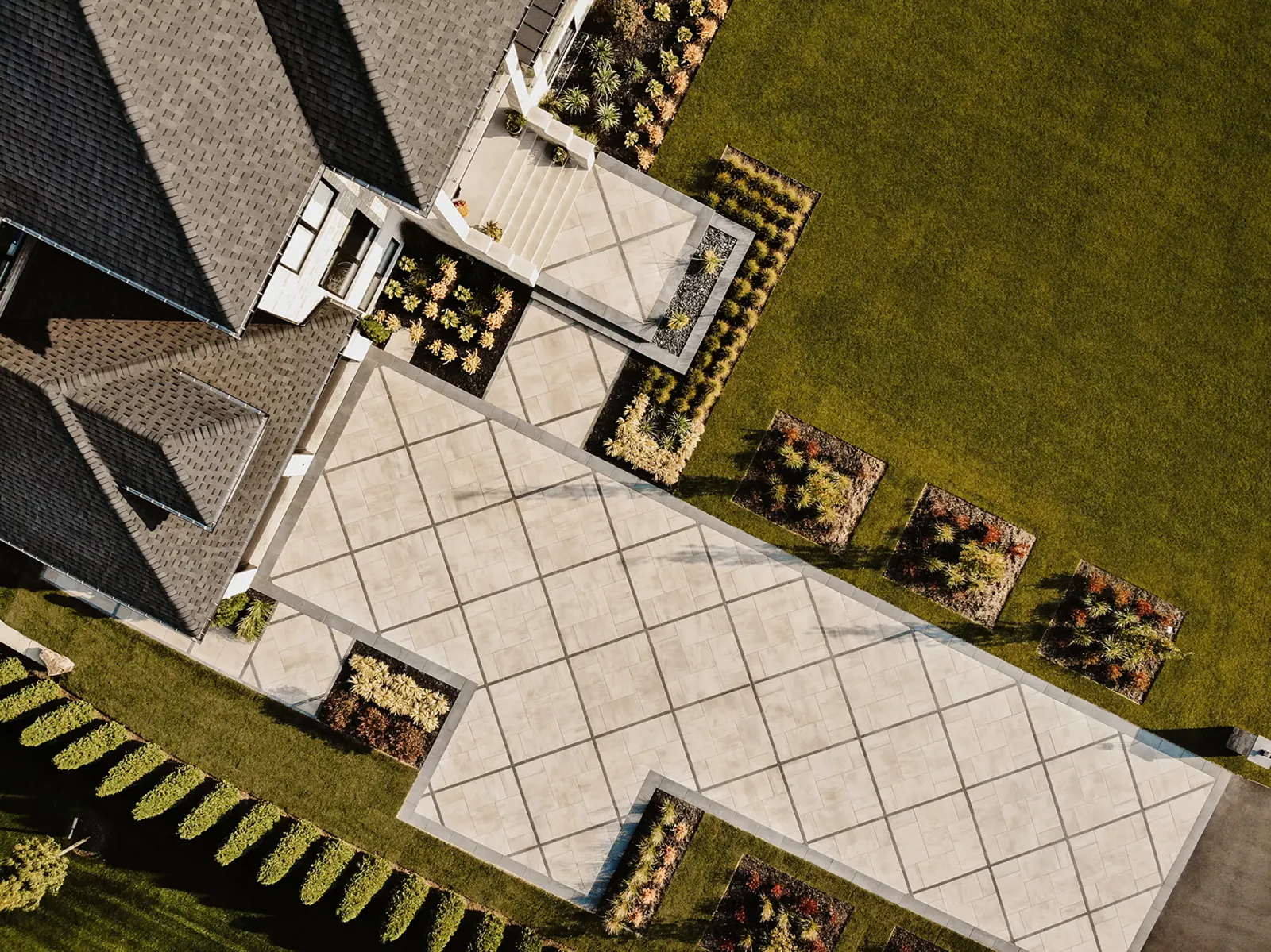
Every project that digs starts the same way: a free Info-Excavation request at least 4 business days ahead, a check of municipal permits and property lines, then careful digging near the marks. This guide explains each step, the trench safety rules and what to do if a line gets hit.
The estimator redoes the calculation with your measurements and region, and gives the source of every price.